

Talkbar — Designing Safety Into the Swipe
Talkbar already ran invite-only events in the real world — curated guests, vetted attendance, real connections. The brief was simple: take that same philosophy and translate it into a digital product, where the guardrails are baked into the experience, not bolted on after.
Role
Product Design • UX • Interaction • Prototyping & Test
Platform
Web app
Tools
Figma • Hotjar
The problem underneath the problem
Most dating apps treat safety as a legal checkbox — terms of service, a report button, maybe a photo badge. But the structural experience stays the same: infinite strangers, zero friction, no accountability.
Research surfaced three root causes: profiles misrepresent so heavily that trust breaks before the first message; the abundance of choice turns swiping into reflex rather than intention; and when messaging costs nothing, people behave nothing like they would face-to-face.
The design challenge wasn't to bolt safety features onto a conventional experience. It was to build mechanics that changed the incentives entirely.
Getting to know who we were designing for
Talkbar already had an advantage most apps don't: a real, existing community. Rather than recruit research participants from scratch, I worked with the founders to pull from people who had already attended their events — people who understood what curated social experiences felt like.
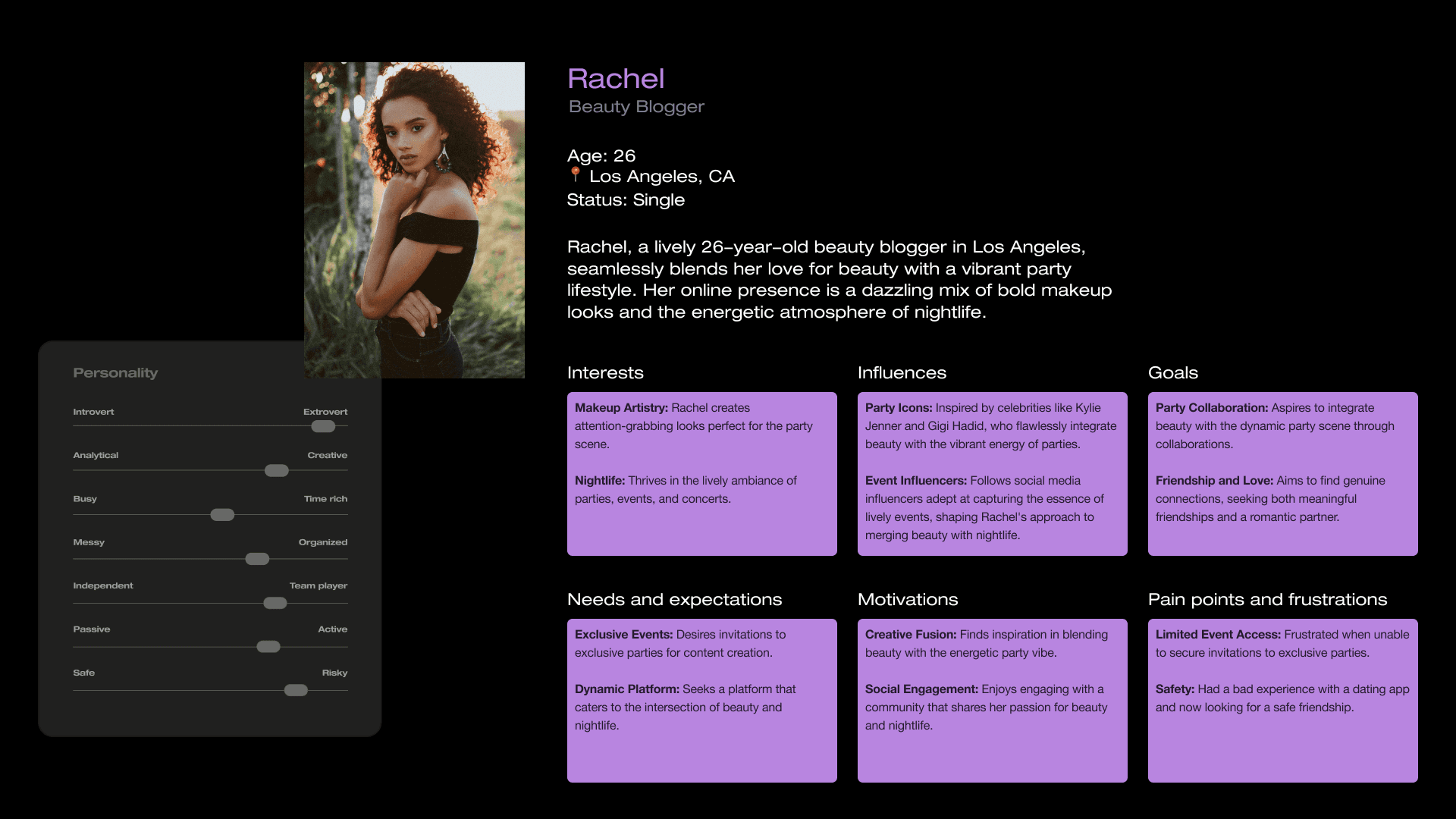
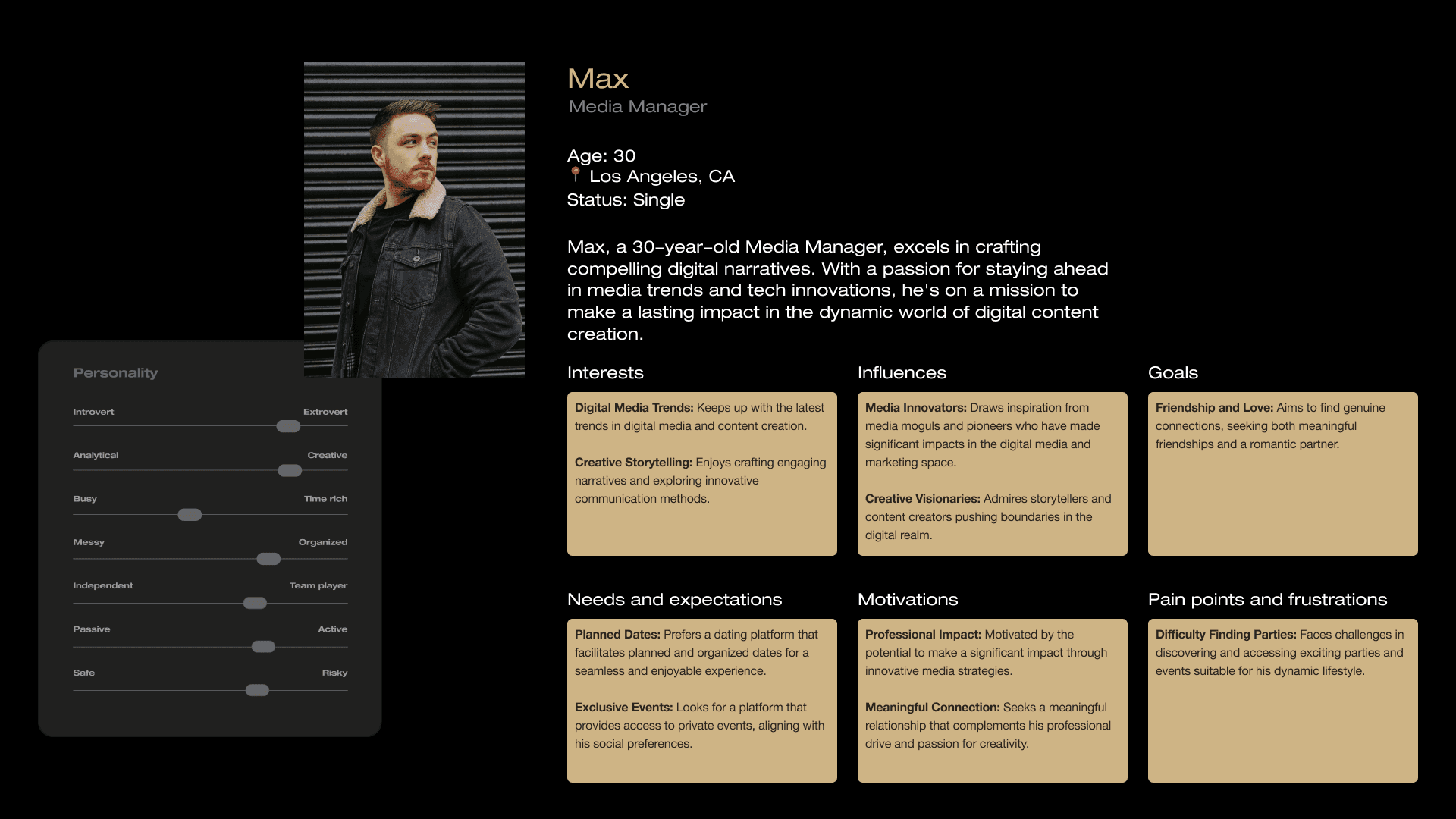
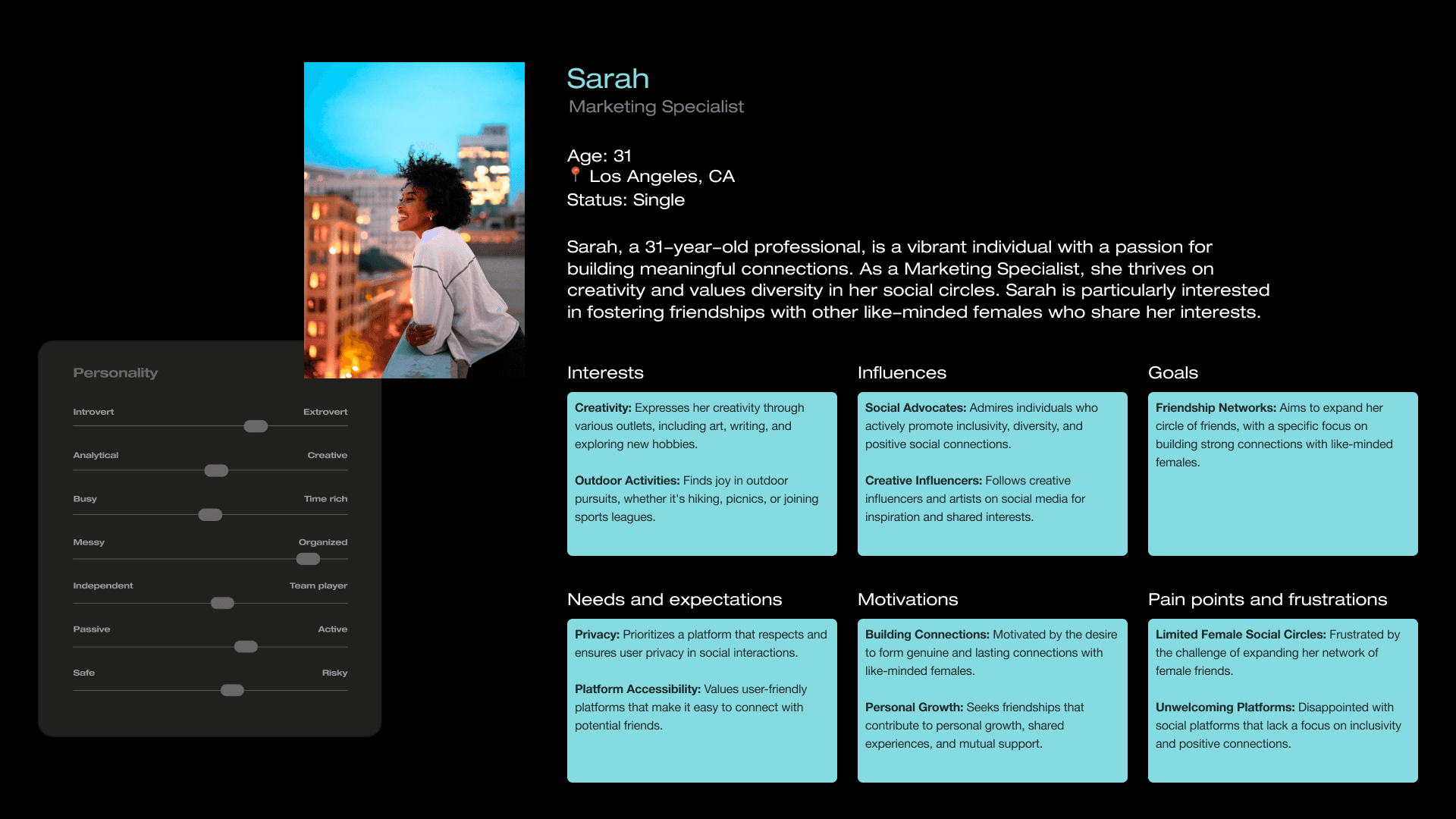
I developed three personas grounded in those conversations:
1
The selective professional — late 20s to mid-30s, time-poor, deeply skeptical of apps but still hoping for a real relationship. Values their time enough to want a vetting process.
2
The social extrovert — already active at events, using dating apps primarily to extend those connections into something more intentional.
3
The once-burned introvert — had a genuinely bad experience on a mainstream app and was cautious about re-engaging. Needed the system itself to feel trustworthy before they'd commit.
The personas helped sharpen something important: the goal wasn't just safety in the abstract. It was perceived safety — people needed to feel that the system had their back, not just be told it did.
From pain points to design questions
Using How Might We framing, I translated the research findings into design opportunities. A few that shaped the final direction:
1
How might we make expressing interest feel intentional rather than reflexive?
2
How might we give users a sense of who someone is before they read a profile?
3
How might we tie the digital experience to real-world venues and events in a way that creates natural accountability?
Persona
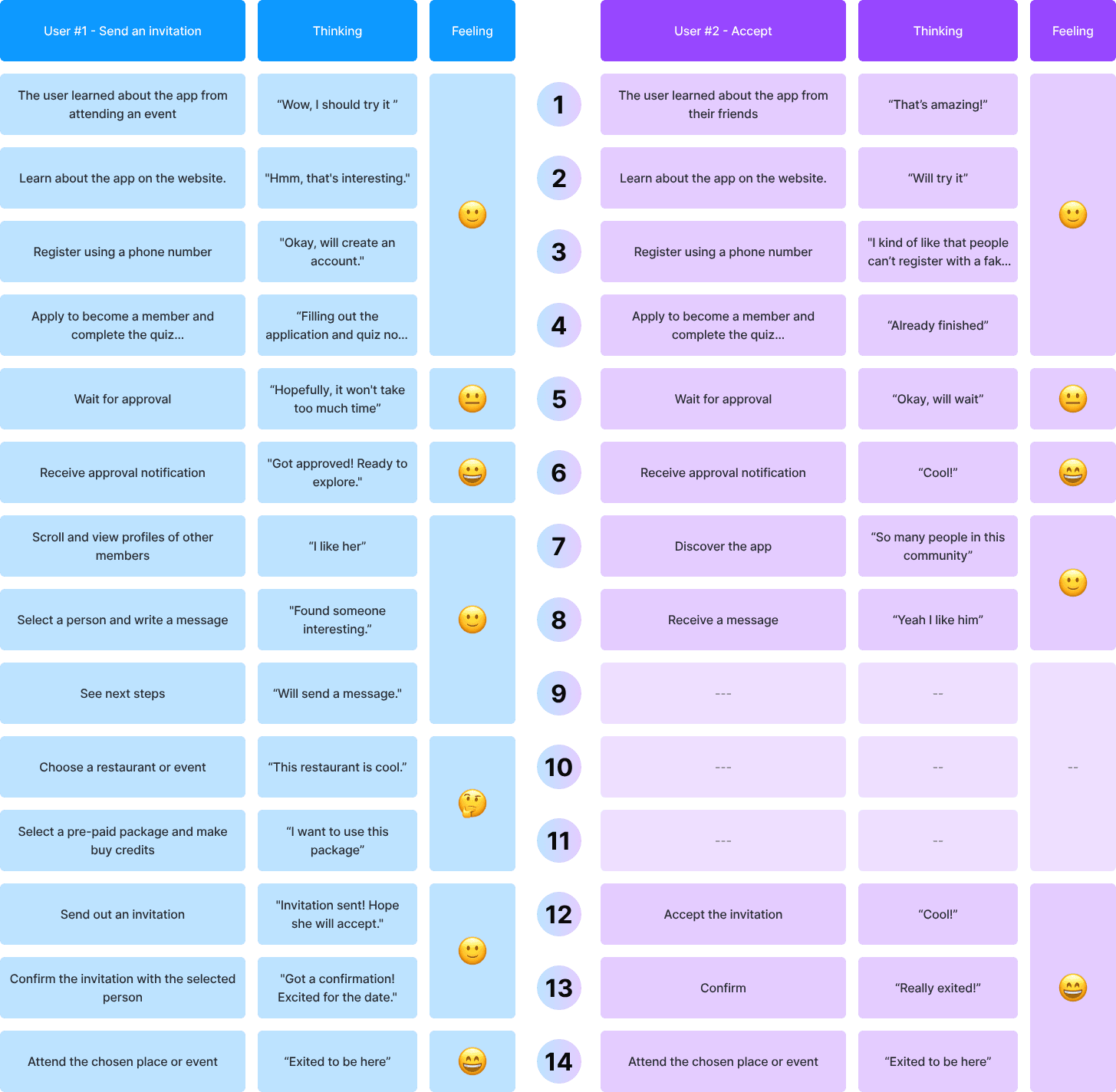
User journey map
Five iterations to get the core screen right
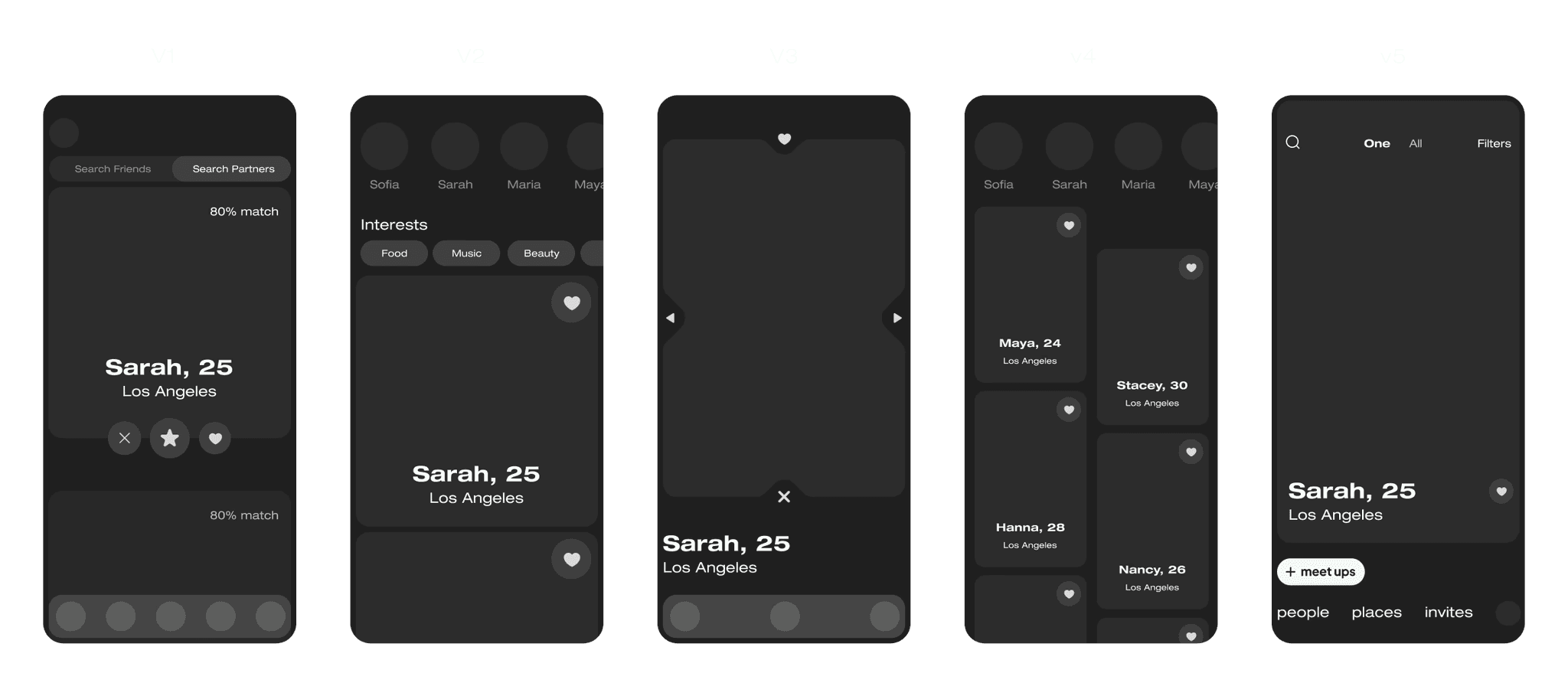
The wireframing process was genuinely iterative — five meaningfully different directions before landing on something that felt right.
1
Led with the profile photo, with three clear actions: decline, save, or like. Clean, but it kept the fundamental "judge by face" mechanic of every other app.
2
Brought stories and interests to the foreground, giving profiles more depth and personality before a match was made.
3
Introduced swipe gesture logic — up to express interest, down to pass — to try to add physical intention to the decision.
4
Showed multiple profiles simultaneously, giving users a wider field of view and reducing tunnel vision on individual cards.
5
Went full-screen and video-first, borrowing the immersive TikTok scroll pattern to let users experience a person's personality before committing to a match.
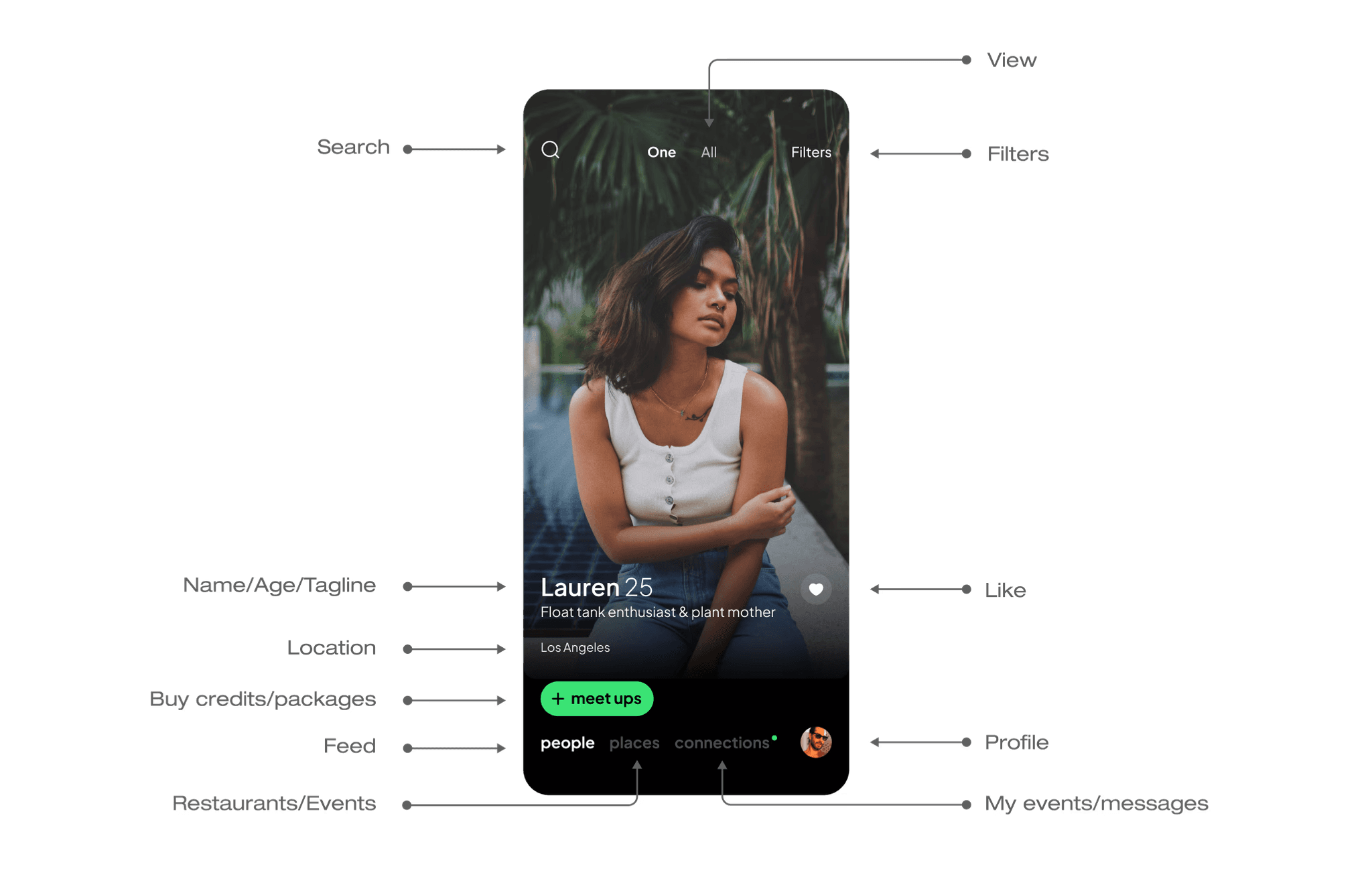
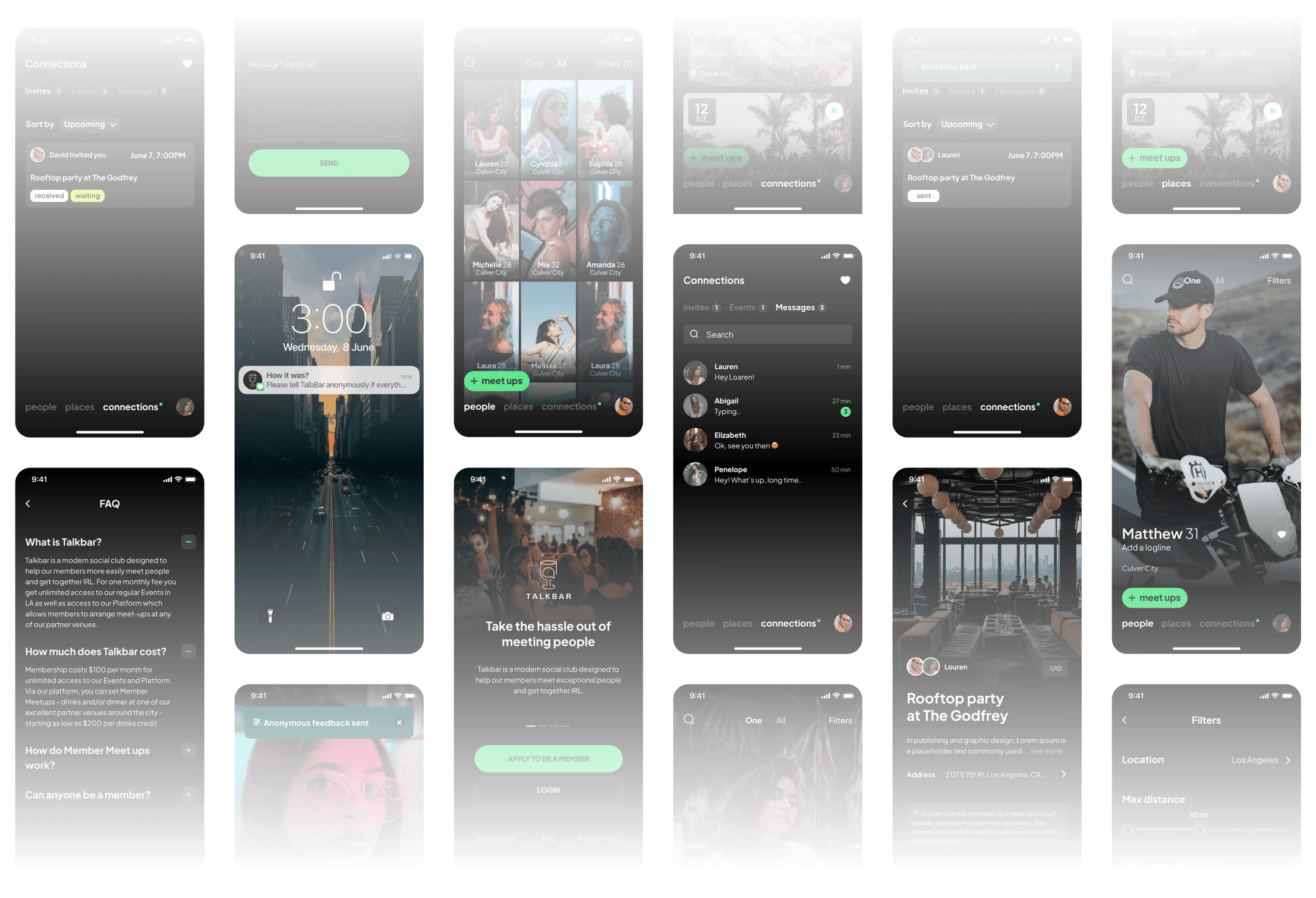
01 – Discovery
Users scroll a full-screen feed to browse potential matches by name, age, tagline, and location
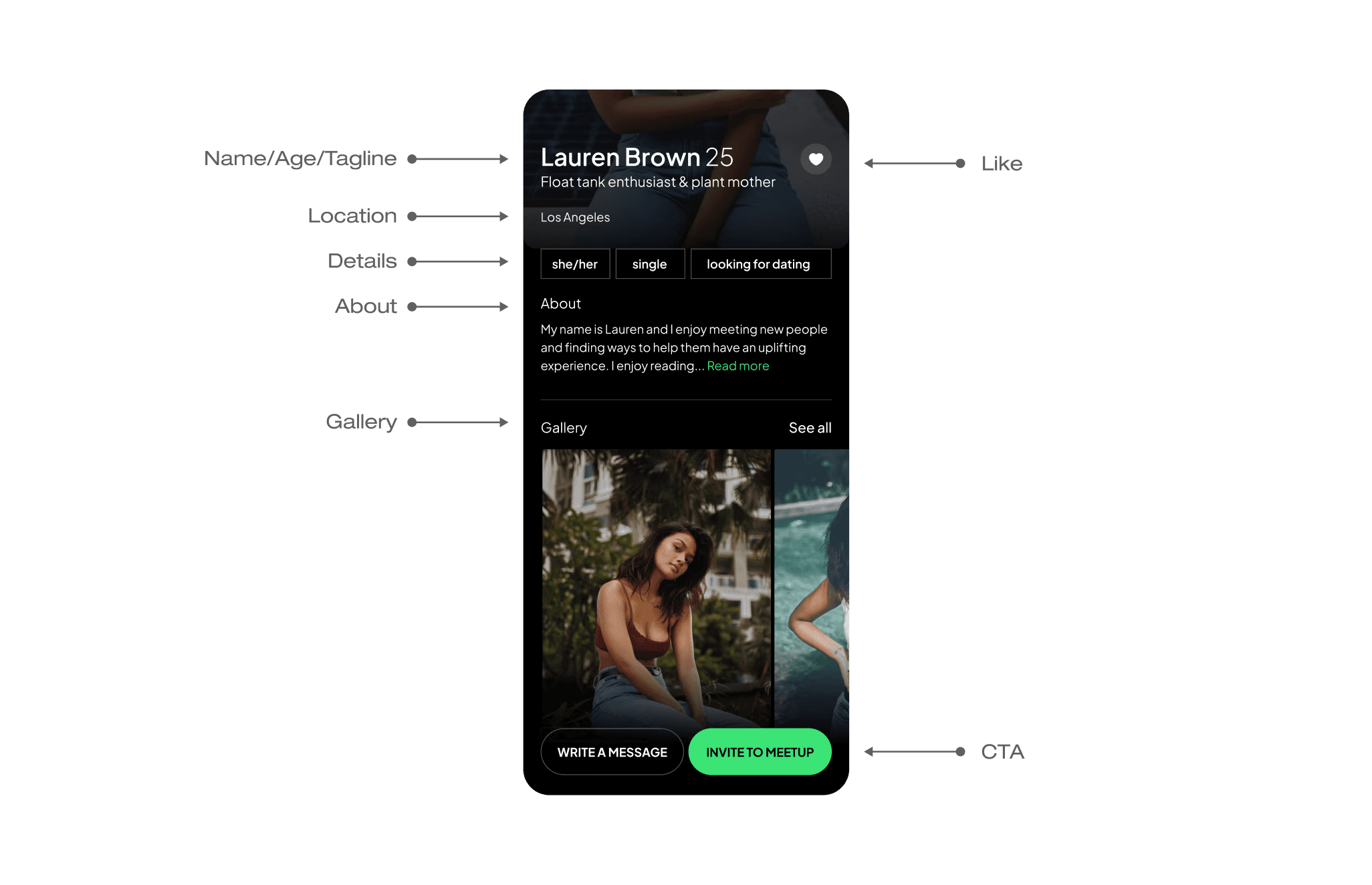
02 – Profile
Tapping opens a deeper view with additional images, a bio, and options to message or invite
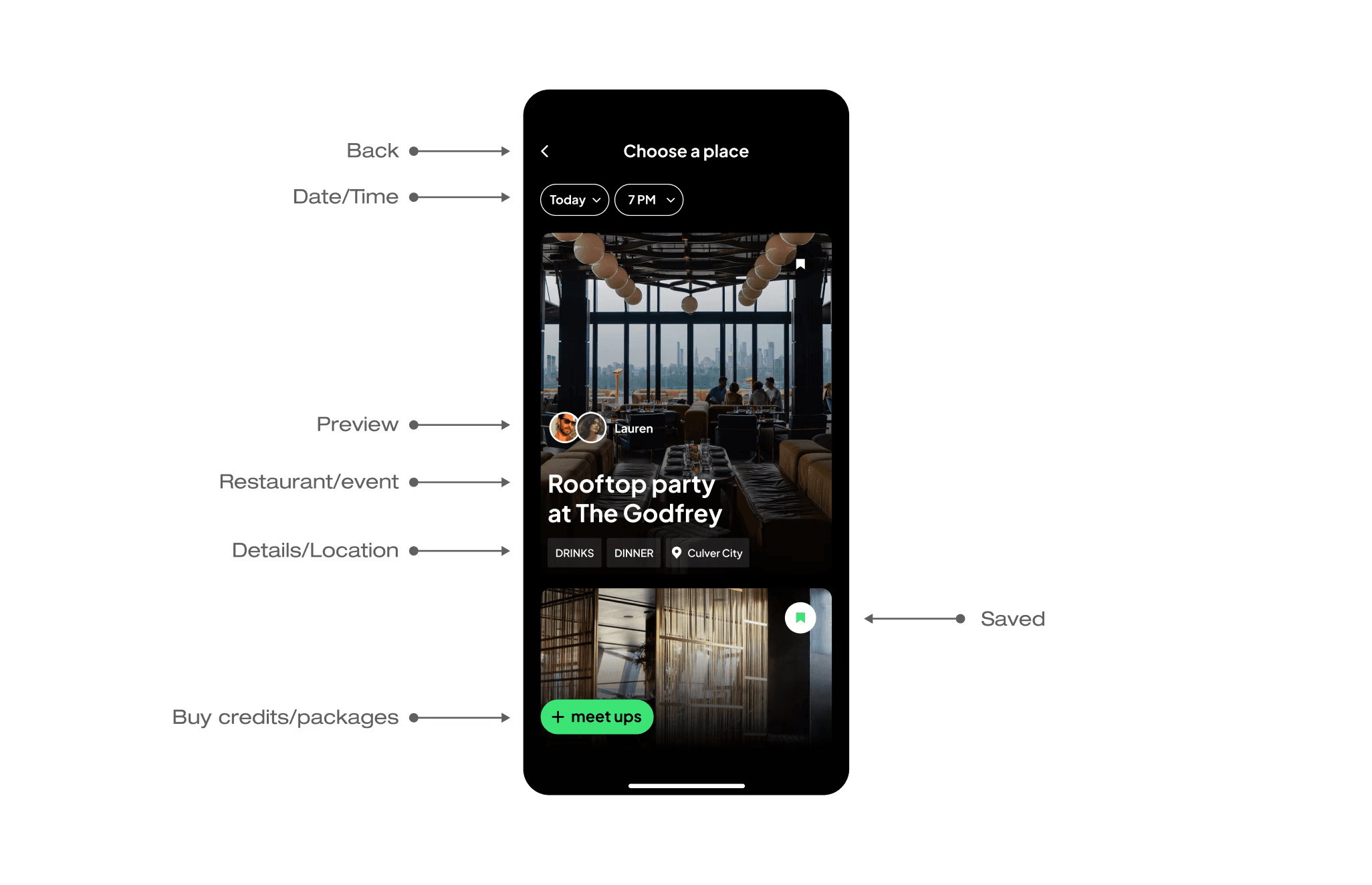
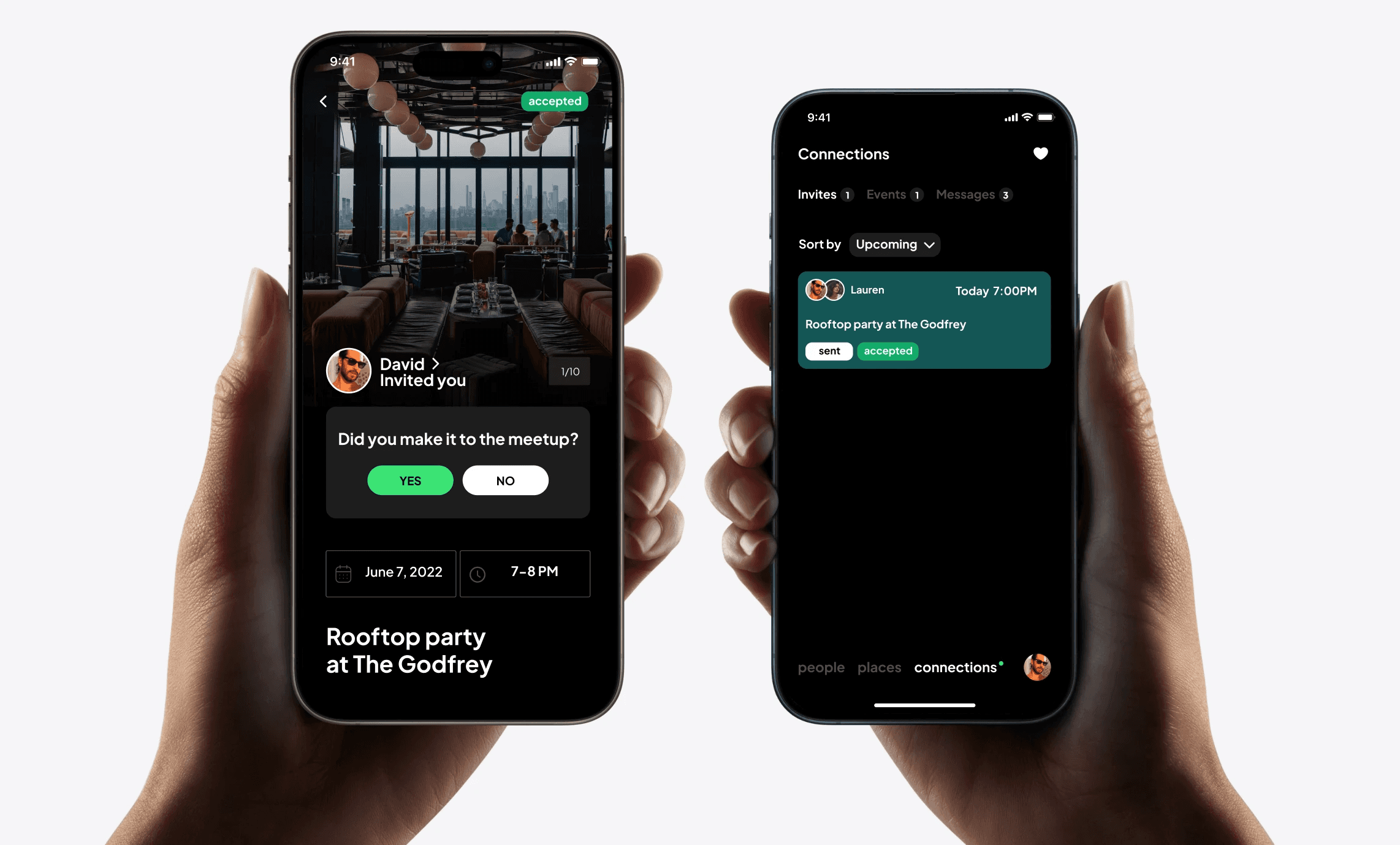
03 – Venue selection
After choosing to invite, users select from a curated list of restaurants or events
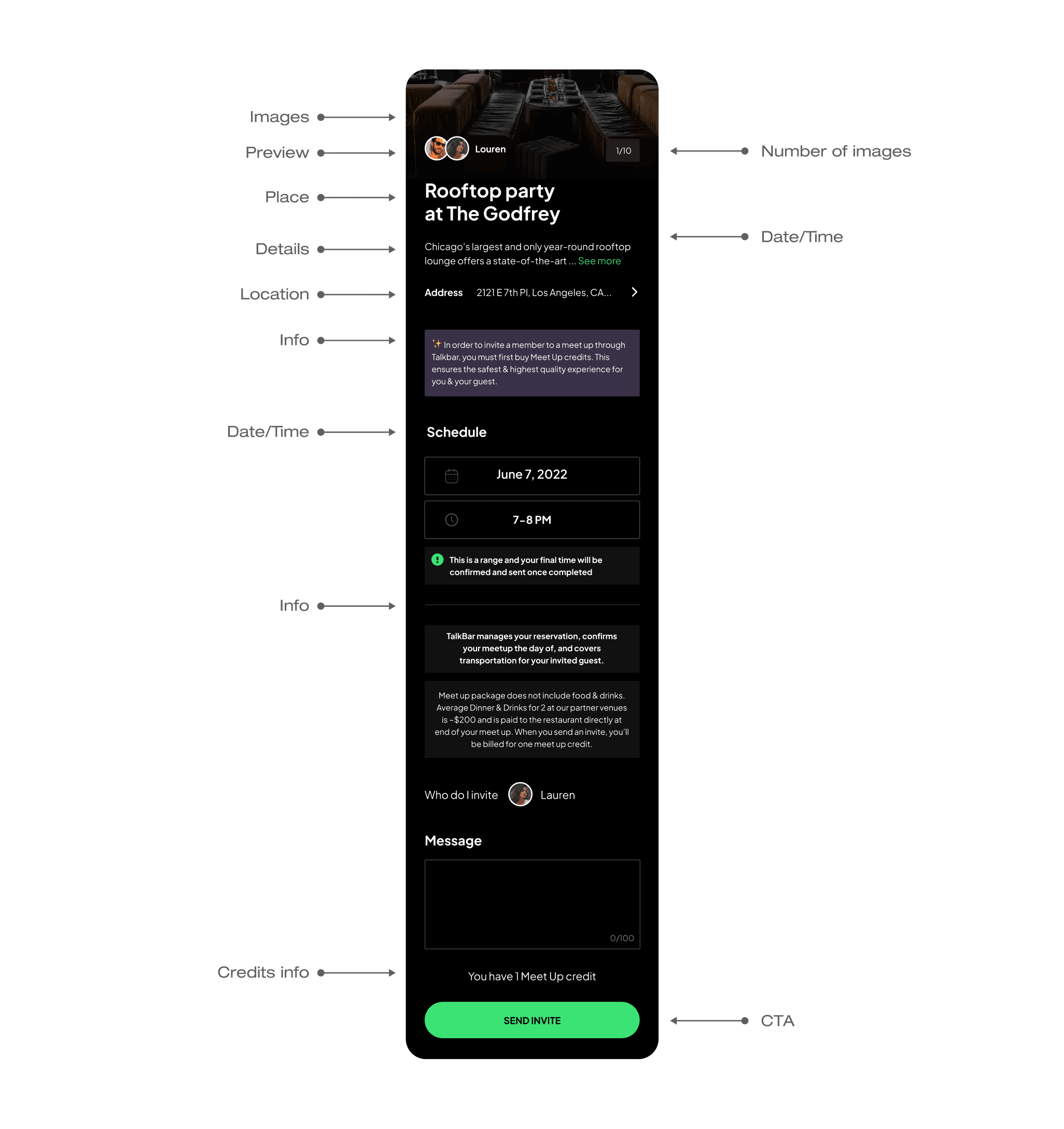
04 – Invitation details
Choose a date and time, write a personal note, confirm with one credit
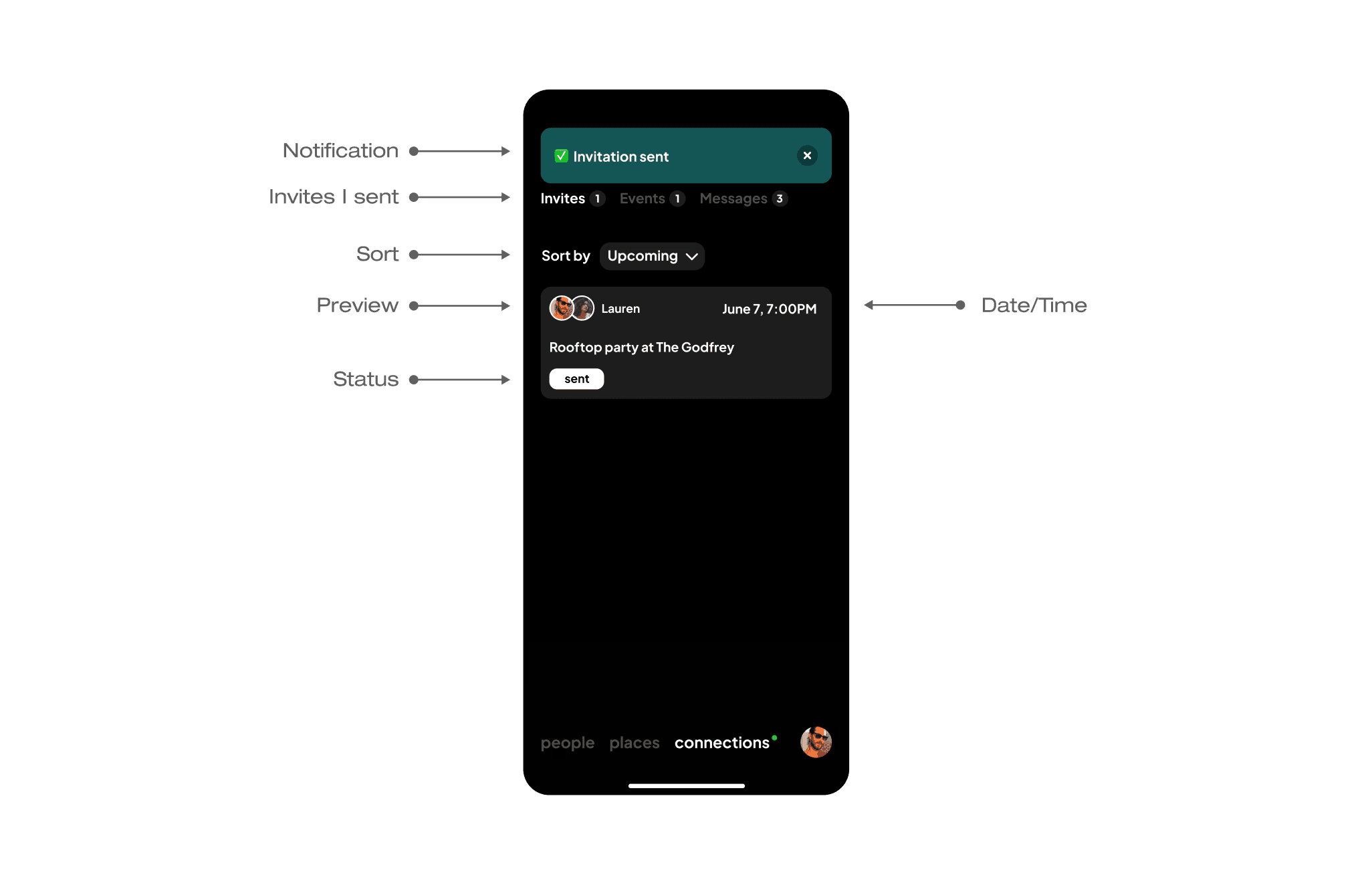
05 – Status tracking
After sending, users can follow the status and browse upcoming events while they wait
Social Media Assets
What I took away
1
Constraints can be the feature. The invite credit system could have felt punishing. Designed thoughtfully, it felt like quality control. The friction was the point.
2
Research with a real community beats recruitment from scratch. Having access to Talkbar's existing event attendees meant the personas were grounded in real behavior, not imagined users. That specificity showed up in every design decision.
3
Designing for trust isn't about what you promise — it's about what the system makes possible. Users don't feel safe because an app says they're safe. They feel safe because the mechanics make unsafe behavior structurally harder.
Work – Product




Work – Marketing



2026 v3.4